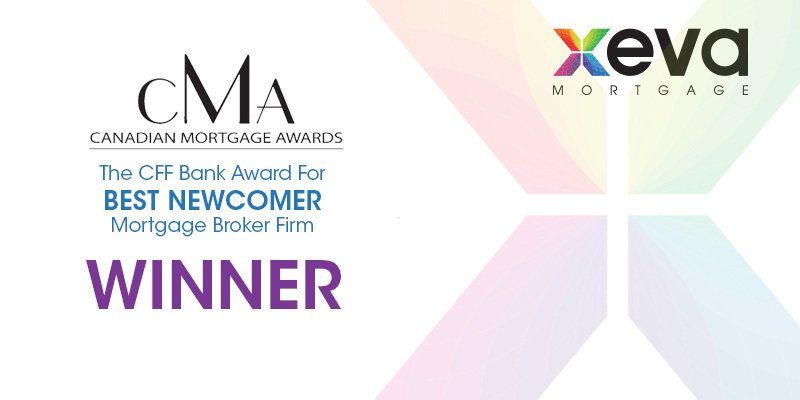
Xeva Wins Best Newcomer Broker Firm | 2015 CMA Awards

Luisa Hough • May 25, 2015

I am very pleased to announce that over the weekend Xeva Mortgage won the 2015 CFF Bank Award for Best Newcomer Broker Firm in Canada at the Canadian Mortgage Awards!

Congratulations to everyone I work with, I am proud to be a part of a team that is recognized for their outstanding commitment to their clients!

The award criteria includes: An award of excellence for an outstanding new mortgage brokerage company, office or franchise, of any size. All nominees should have been established more than 1 year ago but less than 3 years. For the 2015 awards, this means they began trading between December 2011 and January 2014.

Judges criteria includes: business conversations rates, repeat and referral business strategy and success, growth strategy, advertising, training, loan volume, quality.


Recent Posts

By Luisa & Candice Mortgages April 10, 2026
Your credit score is one of the most important numbers in your financial life — especially when it comes to getting a mortgage. But for most Canadians, how that number actually gets calculated remains a bit of a mystery.
By Luisa & Candice Mortgages April 8, 2026
What Online Mortgage Calculators Can—and Can’t—Tell You Online mortgage calculators are everywhere—and on the surface, they seem like a no-brainer. You plug in some numbers, and out pops what you can “afford.” Simple, right? Not quite. While the math itself is correct, the story behind those numbers is often misleading. Mortgage qualification isn’t just about numbers—it’s about context, risk, and lender policy. And that’s where calculators fall short. The Numbers Are Accurate—but the Picture Isn’t An online calculator can show you what a payment might look like at a given interest rate, or how making extra payments could reduce your amortization. That’s useful information! But when it comes to mortgage qualification , calculators don’t account for the many variables that lenders consider, such as: Your credit history and score Employment type (salary, self-employed, contract) Outstanding debts and monthly obligations Assets, savings, and down payment source The property type and location you’re buying Lenders evaluate all these factors through their internal risk models. That means two people entering the exact same numbers into a calculator could receive very different results when they actually apply for a mortgage. Why Online Calculators Can Mislead You When you see a “How much can I afford?” or “Mortgage Qualification” calculator online, it’s easy to treat the result as fact. But these tools don’t know your financial story—they only crunch the data you enter. A calculator can’t predict how a lender views your risk, how new mortgage rules apply to your file, or how things like spousal support, car loans, or variable income will impact approval. In short: calculators estimate payments, not qualification . Use Calculators the Right Way Don’t get us wrong—online calculators still have value. Use them to explore different “what-if” scenarios: How do payments change with different down payment amounts? How would a rate increase affect affordability? What if you added $100 a month to your payments? These tools are great for helping you understand your comfort zone. Just remember: they’re a starting point, not a green light. The Real First Step: Get a Pre-Approval If you’re serious about buying a home, skip the guesswork and get a mortgage pre-approval . It’s quick, free, and gives you real-world clarity on what you can afford. A pre-approval looks at your full financial picture—income, credit, debts, assets—and provides a framework for your purchase price, payment range, and rate options. It’s the only way to get a reliable answer to the question, “What can I really afford?” Final Thoughts Online calculators are convenient, but they can’t replace expert advice. Think of them as a starting point, not a solution. A professional mortgage broker can interpret the numbers, navigate lender policies, and tailor your financing strategy to your actual situation. If you’d like help understanding your true buying power—or want to get pre-approved with confidence— reach out anytime . I’d be happy to walk you through your options and help you make sense of the numbers.
By Luisa & Candice Mortgages April 1, 2026
Mortgage Registration 101: What You Need to Know About Standard vs. Collateral Charges When you’re setting up a mortgage, it’s easy to focus on the rate and monthly payment—but what about how your mortgage is registered? Most borrowers don’t realize this, but there are two common ways your lender can register your mortgage: as a standard charge or a collateral charge . And that choice can affect your flexibility, future borrowing power, and even your ability to switch lenders. Let’s break down what each option means—without the legal jargon. What Is a Standard Charge Mortgage? Think of this as the “traditional” mortgage. With a standard charge, your lender registers exactly what you’ve borrowed on the property title. Nothing more. Nothing hidden. Just the principal amount of your mortgage. Here’s why that matters: When your mortgage term is up, you can usually switch to another lender easily —often without legal fees, as long as your terms stay the same. If you want to borrow more money down the line (for example, for renovations or debt consolidation), you’ll need to requalify and break your current mortgage , which can come with penalties and legal costs. It’s straightforward, transparent, and offers more freedom to shop around at renewal time. What Is a Collateral Charge Mortgage? This is a more flexible—but also more complex—type of mortgage registration. Instead of registering just the amount you borrow, a collateral charge mortgage registers for a higher amount , often up to 100%–125% of your home’s value . Why? To allow you to borrow additional funds in the future without redoing your mortgage. Here’s the upside: If your home’s value goes up or you need access to funds, a collateral charge mortgage may let you re-borrow more easily (if you qualify). It can bundle other credit products—like a line of credit or personal loan—into one master agreement. But there are trade-offs: You can’t switch lenders at renewal without hiring a lawyer and paying legal fees to discharge the mortgage. It may limit your ability to get a second mortgage with another lender because the original lender is registered for a higher amount than you actually owe. Which One Should You Choose? The answer depends on what matters more to you: flexibility in future borrowing , or freedom to shop around for better rates at renewal. Why Talk to a Mortgage Broker? This kind of decision shouldn’t be made by default—or by what a single lender offers. An independent mortgage professional can help you: Understand how your mortgage is registered (most people never ask!) Compare lenders that offer both options Make sure your mortgage aligns with your future goals—not just today’s needs We look at your full financial picture and explain the fine print so you can move forward with confidence—not surprises. Have questions? Let’s talk. Whether you’re renewing, refinancing, or buying for the first time, I’m here to help you make smart, informed choices about your mortgage. No pressure—just answers.

Luisa & Candice Mortgages 

Contact Me Anytime!

The best way to get ahold of me is to submit through the contact form below. However feel free to give me a shout on the phone as well.

Contact Us